Tuesday, November 25, 2008

GM’s “no plan” more of a plan than Citi’s “plan”

Days after the Big Three automakers were sent home without any supper—told to come back after Thanksgiving with a “plan” that shows them to be deserving of $25 billion of taxpayer congressional Treasury largess—Super-sized financial institution Citibank was handed roughly that much cash in an attempt to prevent the bank’s complete collapse. (That is new money added to the estimated $25 billion Citi has already received under the Paulson TARP/injection/bailout extravaganza.)

But one of the big car manufacturers, General Motors, already seems to be ahead of Citibank as far as making plans for financial stability is concerned. GM’s Buick division announced that it has cancelled its five-year, $40 million endorsement deal with star golfer Tiger Woods, while Citibank has confirmed that its 20-year, $400 million deal for the naming rights to the new home of Major League Baseball’s New York Mets is still very much a “go.”

GM’s Chief Executive, Richard Wagoner, was lambasted for taking a private jet to last week’s congressional hearings (and that was bad form), but just a week earlier, the company had already decided to let go of two of its five private jets (all five are leased, not owned). General Motors has also made many other (arguably small) cuts in an effort to trim costs—from slashing worker uniform stipends and buying cheaper wipe-up towels, to trimming the size of test fleets and turning off escalators at corporate HQ after 7 p.m.

These cuts could fall under the “penny wise and pound foolish” category, but they stand in striking contrast to the kinds of cuts Citi has made:

At Citigroup, executives had announced more than 27,000 job cuts, including ones shed through the sale of the company’s Indian outsourcing operations and German banking franchise and prior layoffs. But the bank stepped up its efforts on Monday with plans to eliminate 17,000 workers in the coming months. It will also cut an additional 7,000 or so employees by divesting businesses in the future and could shed more jobs through attrition.

The job cuts would be in addition to about 23,000 layoffs already this year and leave the bank with about 300,000 employees, down from its peak of about 375,000 in the fourth quarter of 2008. And Citi executives said there could be more layoffs ahead as they moved forward with plans to reorganize the company next year.


Meanwhile, back at GM, failure to get a bridge loan this year could result in the direct loss of some 120,000 jobs—with an additional seven-and-a-half times as many spin-off jobs potentially lost as a ripple effect. That’s over a million jobs total from GM’s hardships—and that doesn’t figure in Ford or Chrysler.

Though the failure of another big financial institution is likely not in the country’s economic interests, either, based on recent history, it is hard to argue that Citi is more deserving of its backstop than America’s automakers.

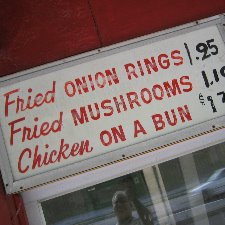
(photo by me)
(cross-posted on The Seminal and capitoilette)

Labels: , , , , , ,

Monday, November 17, 2008

too late

Over the next two months, Mr. Paulson must impose some coherence and clarity on the bailout. Otherwise he will only fan anxieties and mistrust, which will undermine the effectiveness of his good decisions and amplify the fallout of his bad ones. With markets gyrating wildly, and the economy deteriorating rapidly, the nation needs clear leadership and a sound plan.


After spending the entire length of today’s lead editorial demonstrating just how badly Treasury Secretary Hank Paulson has handled the economic crisis and ensuing attempts at a “bailout,” the New York Times undermines its point with this half-hearted admonition. Honestly, if the Times editorial board knows of a good decision by Mr. Hanky, might they have shared it?

The nation does need clear leadership and a sound plan, but, to date, the nation has gotten neither. As pointed out in this very editorial, any “modest easing the bailout initially brought about in the credit markets is now being reversed over doubts about the Treasury’s stewardship of the plan.” Paulson’s actions have been reactive and woefully behind the curve; he lacks anything like a coherent strategy, and the moves he has taken seem less motivated by an interest in protecting wage-earning Americans than in protecting Paulson’s pals and ideological biases.

There is also zero transparency—something many econ-watchers consider of utmost importance to stabilizing credit markets. . . not to mention the stock market. Beyond the lack of oversight as to what the banks are doing with the billions in bailout cash that they have received (much will end up going to bonuses, balance sheets, and the buy-ups of competing banks), it has now been revealed that there was another $2 trillion (!) dispensed by the Fed that is completely opaque.

Paulson has refused to use any of the TARP cash to help homeowners facing foreclosure, even though that might slow the bleeding and even stimulate some local economies, and now he has also rejected using his precious kitty to help the auto industry. Though it’s true that an auto-industry bailout administered with a similar chaotic attitude and the same lack of rules and requirements would do little in the long run to fix systemic problems in this sector, deciding that Goldman Sachs was “too big to fail” but GM is not is as stupid as it is hypocritical.

Given that record, I have no need to extend the rhetorical lifeline the Times so generously offers. Clear leadership and a sound plan cannot come soon enough, and given the noted rapid deterioration of the economy and the number of Paulson’s remaining days, it probably won’t.


(cross-posted on capitoilette and The Seminal)

Labels: , , , ,

Wednesday, October 15, 2008

Hank Paulson earns his nickname

Tuesday, October 14, 2008

how cute. . .

Hank is going to let Bush pretend he’s still in charge. . . .

The Treasury Department, in its boldest move yet, is expected to announce a plan on Tuesday to invest up to $250 billion in banks, according to officials. The United States is also expected to guarantee new debt issued by banks for three years — a measure meant to encourage the banks to resume lending to one another and to customers, officials said.

And the Federal Deposit Insurance Corporation will offer an unlimited guarantee on bank deposits in accounts that do not bear interest — typically those of businesses — bringing the United States in line with several European countries, which have adopted such blanket guarantees.

. . . .

Treasury Secretary Henry M. Paulson Jr. outlined the plan to nine of the nation’s leading bankers at an afternoon meeting, officials said. He essentially told the participants that they would have to accept government investment for the good of the American financial system.

Of the $250 billion, which will come from the $700 billion bailout approved by Congress, half is to be injected into nine big banks, including Citigroup, Bank of America, Wells Fargo, Goldman Sachs and JPMorgan Chase, officials said. The other half is to go to smaller banks and thrifts. The investments will be structured so that the government can benefit from a rebound in the banks’ fortunes.

President Bush plans to announce the measures on Tuesday morning. . . .


Henry Paulson, who himself had to be dragged kicking and screaming to this equity injection plan, worked out the details in private with the biggest players on Monday. . . and then kept it on the QT so that Still President Bush could come out on Tuesday morning and make it seem like he had some role to play in all this.

He didn’t.

Truth is, Mr. Hanky didn’t much either. Democrats in Congress inserted the language (over Paulson’s objections) in the TARP bill that gave Treasury the authority to do this; Paulson then did nothing for ten days, until markets tanked, credit got tighter, and UK PM Gordon Brown got most of the Europe on board with a similar plan. Hank Paulson is just desperately trying to keep up.

Meanwhile, Hank’s old pals at Goldman Sachs have cut a deal with New York state to headquarter their newly configured full-service bank in New York City. So, they get more from the federal government, and a state tax break, too.

How cute.


(cross-posted on The Seminal and capitoilette. . . where you will also find something about a nasty "typo" on some New York ballots. . . .)

Labels: , , , ,

Monday, October 13, 2008

take that, Hank!

Take that, Hank Paulson!

Take that, Alan Greenspan!

In fact, take that, whole freakin' conservative movement!

Paul Krugman wins Nobel prize.


UPDATE: a little more detail on the award.


(Of course, I just posted about Hank, and Paul, and me on Friday. . . and there is a follow-up today on cpaitoilette.)

Labels: , ,

Friday, October 10, 2008

Hank, if you’re reading this. . .

Monday, September 22, 2008

damn yankees: Steinbrenner. . . and Paulson!

Who would of thought that the connection between the end of Yankee Stadium and the end of capitalism as we know it was anything more than metaphorical?

I was surprised, too.

Labels: , , , ,